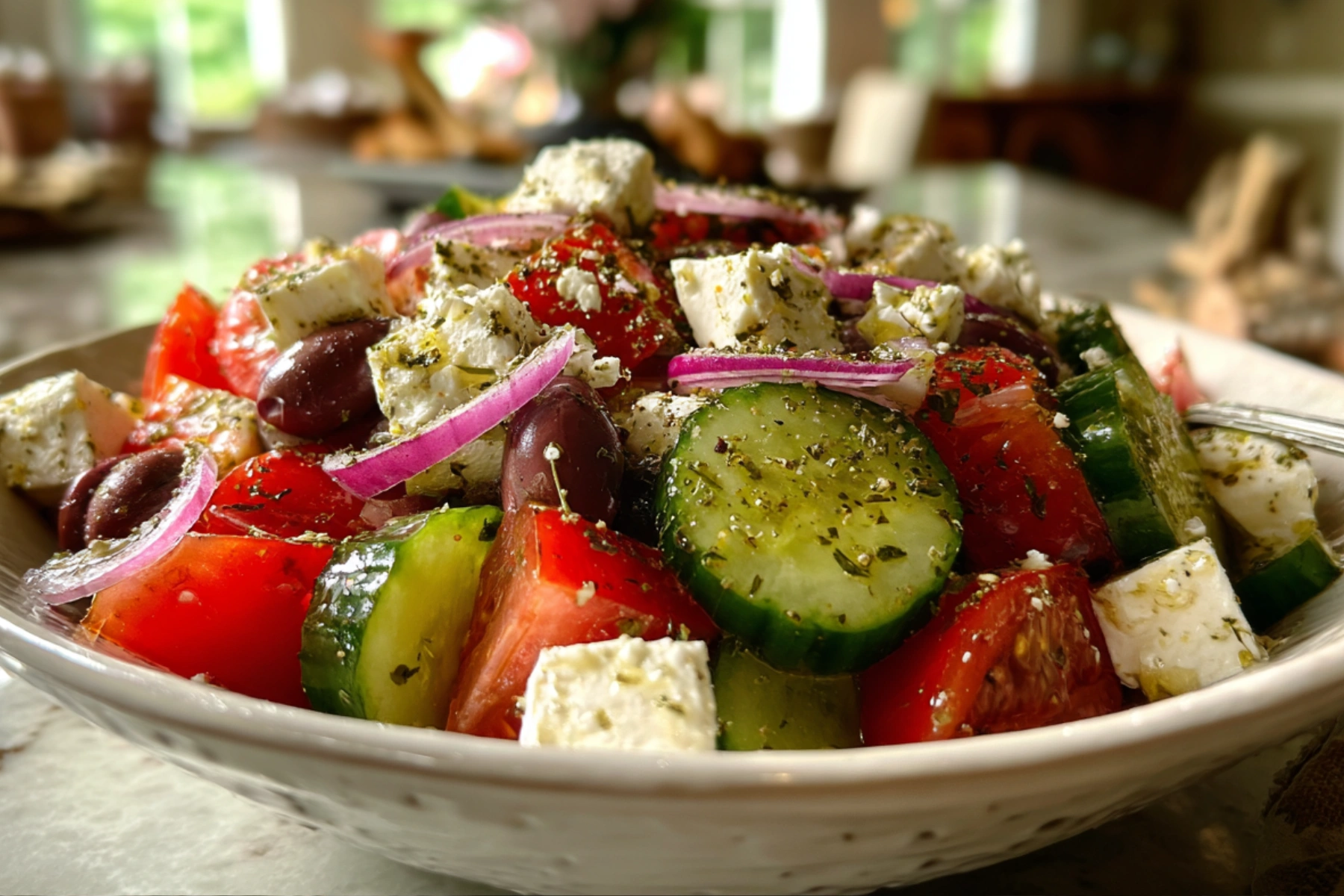

Greek Salad is one of those recipes that proves the best meals do not need to be complicated. When a salad is built from crisp cucumber, juicy tomatoes, sharp red onion, briny olives, and creamy feta, it already has everything it needs to feel complete. Add a simple dressing made with olive oil, vinegar, oregano, salt, and pepper, and you have something that tastes fresh, vibrant, and deeply satisfying without spending much time in the kitchen.
What makes Greek Salad so appealing is the way it delivers both simplicity and character at the same time. It is colorful enough to brighten a dinner table, easy enough to prepare on a busy weekday, and flavorful enough to serve when friends or family are coming over. It works as a quick lunch, an easy side dish, or part of a larger spread when you want something light and refreshing on the table. If you enjoy fresh, colorful salads, it also pairs beautifully with Tuscan Tomato Salad and Thai Cucumber Salad for an easy Mediterranean-inspired meal.
It is also the kind of salad that feels timeless. Greek Salad fits naturally into the kind of plant-forward eating pattern often associated with Mediterranean-style meals, where vegetables, olive oil, and simple whole ingredients play a central role. If you enjoy learning more about that style of eating, this Mediterranean diet overview is a helpful reference..
Table of Contents
Why This Greek Salad Works So Well
A good Greek Salad works because every ingredient has a clear purpose. The tomatoes bring juiciness and sweetness. The cucumber adds cool crunch. Red onion gives the salad a little sharpness and bite. Kalamata olives add saltiness and depth. Feta softens everything with its creamy, tangy texture. Then the olive oil and vinegar pull the whole bowl together with a clean, simple finish.
That balance is what makes Greek Salad so satisfying. It never feels heavy, yet it still feels substantial enough to sit beside a main dish or even stand on its own for a light lunch. There is contrast in every bite, and that contrast is exactly what keeps the salad interesting. You get crisp and creamy, juicy and briny, light and rich all at once.
Another reason this recipe works is that it depends more on freshness than technique. You do not need to roast anything, blend anything, or cook anything. You just need to chop, season, and toss. That makes Greek Salad especially helpful when you want a homemade dish that feels healthy and colorful but do not want a long prep process.
It also fits beautifully into many different meals. It works in summer because it feels cool and refreshing, but it is not limited to one season. It can add brightness to a cozy winter dinner just as easily as it can anchor a warm-weather lunch.
Another reason this recipe works is that it depends more on freshness than technique. You do not need to roast anything, blend anything, or cook anything. You just need to chop, season, and toss. That makes Greek Salad especially helpful when you want a homemade dish that feels healthy and colorful but do not want a long prep process. For a simple visual guide to building a balanced plate around meals like this, the Healthy Eating Plate is a useful place to start.
What Greek Salad Tastes Like
Greek Salad tastes fresh first. That is usually the first impression. The cucumber and tomatoes give it that crisp, juicy quality that immediately feels clean and refreshing. Then the deeper flavors start to come through. The olives bring a briny richness, the feta adds tangy creaminess, and the onion gives each bite a little edge.
The dressing is simple, but it matters. Olive oil gives the salad a smooth, rich finish without making it heavy. Vinegar adds brightness and a little sharpness. Oregano gives the salad its familiar Mediterranean-style character. Salt and pepper bring everything into balance.
What makes the flavor especially nice is that nothing covers anything else up. The ingredients stay distinct. You can still taste the tomato as tomato, the cucumber as cucumber, and the feta as feta. The salad feels seasoned, not buried under dressing. That clean, direct flavor is one of the main reasons Greek Salad has stayed popular for so long.
Ingredients for Greek Salad
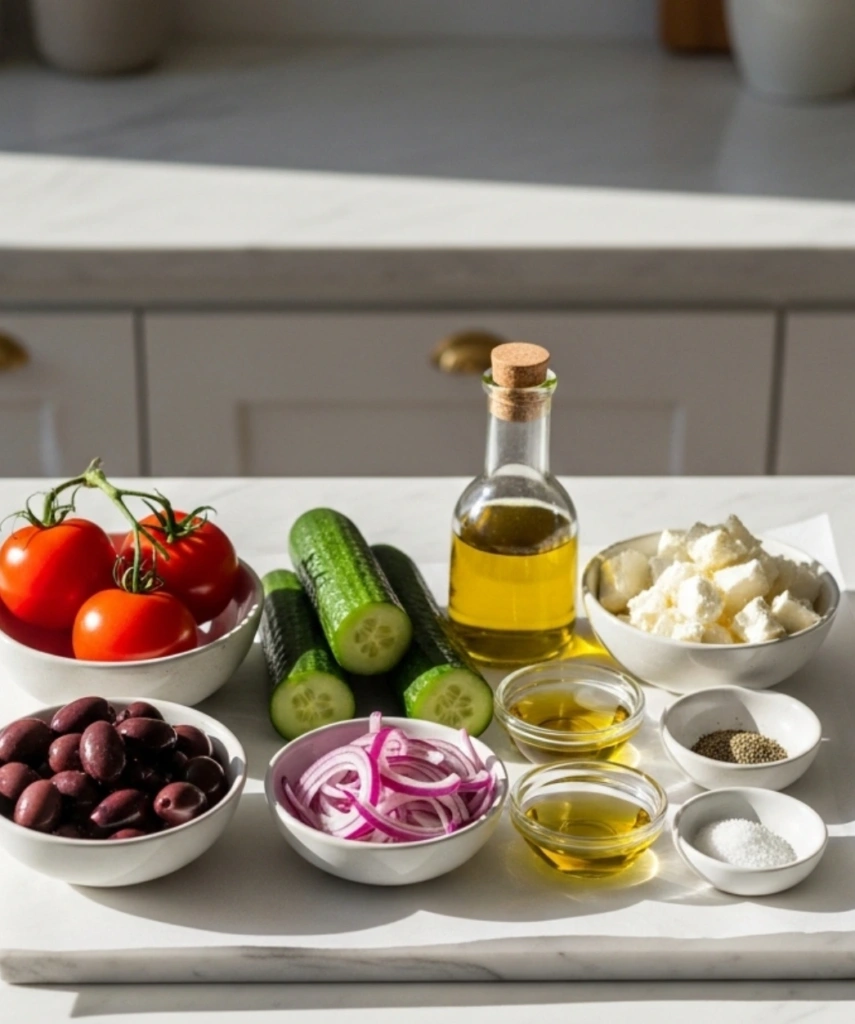
For a classic bowl of Greek Salad, you need a short list of ingredients:
- Tomatoes
- Cucumber
- Red onion
- Kalamata olives
- Feta cheese
- Olive oil
- Vinegar
- Oregano
- Salt
- Black pepper
Because the ingredient list is short, quality matters. Ripe, flavorful tomatoes will always make a better salad than pale, watery ones. Crisp cucumber gives the bowl its freshness. Good feta adds creaminess and salt without becoming too soft. A flavorful olive oil makes the dressing taste round and smooth even though it is incredibly simple.
This is one of those recipes where you really notice the difference between fresh ingredients and tired ones. There is nowhere for dull produce to hide. That is why Greek Salad often tastes best when it is made with ingredients that are at their peak.
How to Make Greek Salad
Greek Salad comes together in a few easy steps. Start by chopping the tomatoes into bite-sized pieces. Slice or quarter the cucumber, depending on its size, so that the pieces feel easy to eat. Thinly slice the red onion. Add all of these to a large bowl, then add the Kalamata olives.
Next, drizzle in olive oil and vinegar. Sprinkle with dried oregano, salt, and black pepper. Toss gently so the vegetables get coated without becoming bruised. Finish by adding the feta on top, either crumbled lightly or in larger chunks depending on the look and texture you want.
That is it. The method is simple, and that is part of the beauty of the recipe.
The only real rule is to avoid overmixing. Greek Salad should feel fresh and structured, not soft and watery. If you stir too aggressively, the tomatoes can start to break down and the feta can disappear into the dressing. A gentle toss keeps the salad looking bright and tasting clean.
The Secret to a Great Greek Salad
The secret to a truly good Greek Salad is restraint. It can be tempting to add lots of extra ingredients, pour in too much dressing, or toss it until everything looks fully combined. But Greek Salad is at its best when it stays simple and light-handed.
The dressing should support the vegetables, not drown them. The feta should stand out, not melt into the bowl. The tomatoes and cucumber should still have their shape and texture. When you keep those ideas in mind, the salad comes out tasting fresher and more balanced.
Another secret is timing. Greek Salad tastes best when it is assembled close to serving time. The longer tomatoes sit in salt and vinegar, the more liquid they release. That is not necessarily bad, but it changes the texture. If you want the salad to stay especially crisp and fresh, wait until just before serving to add the dressing and toss everything together.
Choosing the Best Ingredients
Tomatoes
Tomatoes are one of the stars of Greek Salad, so choose the best ones you can find. Look for tomatoes that feel heavy for their size and smell slightly sweet at the stem. Cherry tomatoes, grape tomatoes, Roma tomatoes, or larger garden tomatoes can all work. What matters most is flavor.
Cucumber
Cucumber gives the salad its cooling crunch. Use one that feels firm and fresh. If the seeds are very watery, you can remove some of them, but for many cucumbers this is not necessary. The key is keeping enough crisp texture in the final bowl.
Red Onion
Red onion adds sharpness and contrast. Slice it thinly so it does not overpower the rest of the ingredients. If you want a milder flavor, you can briefly rinse the sliced onion in cold water and pat it dry before adding it.
Kalamata Olives
Olives give the salad its rich, salty depth. Kalamata olives are especially good because they bring bold flavor without needing much else. If they have pits, remove them first for easier eating.
Feta
Feta is one of the ingredients that gives Greek Salad its unmistakable character. A block of feta often gives a richer texture than pre-crumbled feta, but both can work. If you want a more traditional feel, leave it in generous pieces rather than crumbling it too finely.
Olive Oil and Vinegar
Since the dressing is so simple, use olive oil you enjoy the taste of. Vinegar keeps the dressing bright and sharp without overpowering the salad.
Tips for the Best Greek Salad Every Time
One of the best tips is to dress the salad just before serving. That helps the vegetables stay crisp and prevents too much liquid from collecting at the bottom of the bowl.
Another useful tip is to cut the vegetables into sizes that feel balanced together. If the tomato pieces are very large and the cucumber pieces are tiny, the salad can feel awkward to eat. Try to keep the pieces close enough in size that each forkful feels balanced.
Do not overdo the salt at the beginning. Feta and olives are already salty, so a little seasoning often goes a long way. It is better to toss the salad, taste it, and then decide whether it needs more.
Keep the dressing simple. Greek Salad does not need sugar, creamy dressing, or many extra seasonings. Olive oil, vinegar, oregano, salt, and pepper are enough to let the ingredients shine.
Finally, serve it fresh. Greek Salad is one of those dishes that looks and tastes best soon after it is assembled.
Easy Variations
Greek Salad is excellent in its classic form, but it is also easy to adapt when you want something slightly different.
If you want to make it more filling, add grilled chicken, shrimp, or chickpeas. These additions turn the salad into more of a main dish while still keeping the fresh Mediterranean-style feel.
If you want more crunch, you can add green bell pepper. If you want a softer, sweeter note, you can add a few extra ripe tomatoes or use mixed tomato varieties.
If you prefer a pepperier green element, a small handful of arugula can work well. If you want a heartier bowl, you can serve the salad over cooked grains or beside warm bread.
The key is not to add so much that the original character of the salad disappears. Greek Salad is about freshness, brightness, and simplicity. Variations work best when they stay true to that.
What to Serve with Greek Salad
Greek Salad works with many different meals, which is one reason it is so useful. It pairs beautifully with grilled chicken, roasted fish, shrimp, lamb, or simple pasta dishes. It also works well with crusty bread, warm pita, or rice if you want to build out a more complete plate.
For a light lunch, Greek Salad can stand on its own with a piece of bread or a little extra feta on top. For dinner, it makes a perfect contrast to warm proteins and richer dishes because it adds freshness and acidity to the table.
It is also a very good dish for gatherings. Whether it is a picnic, barbecue, potluck, or family dinner, Greek Salad brings color and flavor without needing reheating or complicated serving instructions. That makes it an easy recipe to rely on when you need something simple that still feels generous and beautiful. For a fuller meal, serve it with Garlic Butter Shrimp, Avocado Spinach with Grilled Chicken, or even alongside Lentil Salad if you want a fresh and hearty spread.
How to Store Greek Salad
Greek Salad is best fresh, but leftovers can still be stored for a short time. Keep them in an airtight container in the refrigerator. The salad is usually at its best within about a day, because the tomatoes and cucumber will start to soften as they sit.
If you want to make Greek Salad ahead, it is better to keep the chopped vegetables, dressing, and feta separate until closer to serving time. That way the vegetables stay crisper, and the finished salad feels much fresher when you assemble it.
If leftovers release liquid in the fridge, that is normal. Tomatoes especially tend to release moisture once salted and dressed. Give the salad a gentle toss before serving again, and know that the texture may be slightly softer than when it was first made.
Greek Salad for Meal Prep
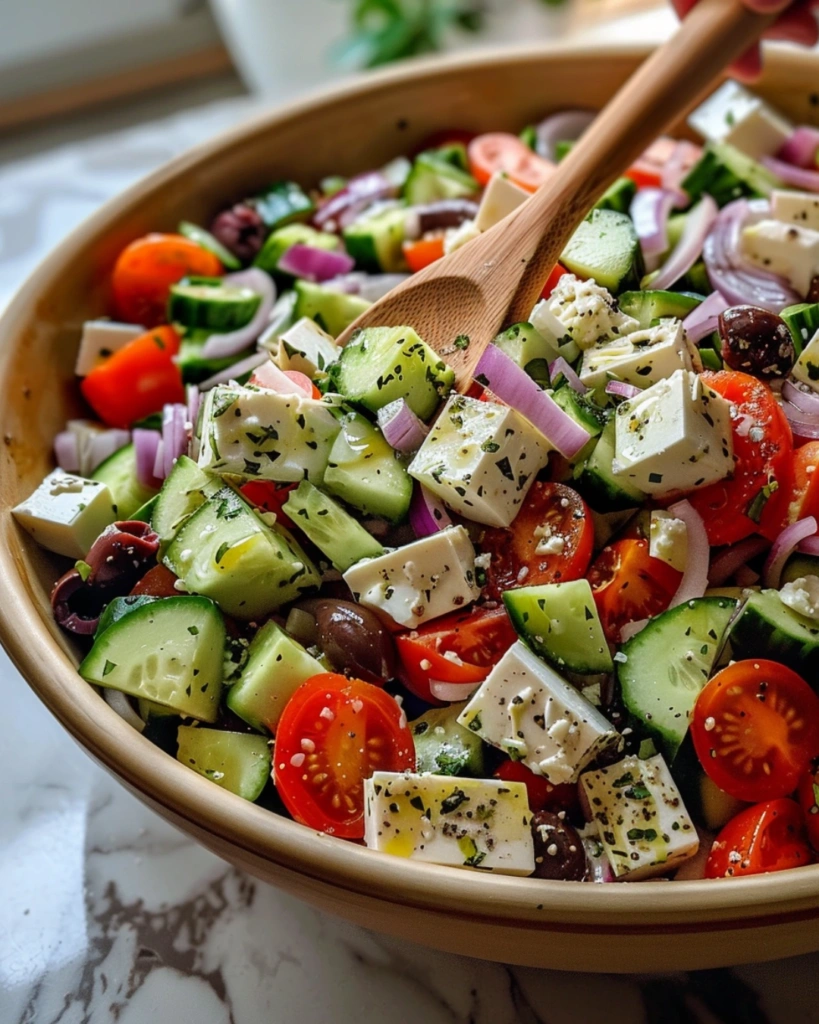
Greek Salad can work for meal prep if you treat it a little differently from a salad you plan to eat right away. Chop the tomatoes, cucumber, and onion ahead of time and store them separately or together without dressing. Keep the olives in their own container if you like, and store the feta separately too. Mix the dressing in a small jar and refrigerate it.
When you are ready to eat, combine everything and toss just before serving. This approach helps preserve the freshness and crunch that make Greek Salad so appealing.
That kind of setup makes it easy to enjoy a fresh, colorful lunch without having to cut vegetables every day. It is a small amount of prep with a big payoff.
Greek Salad

Equipment
- cutting board
- knife
- large bowl
- measuring spoons
- serving spoon
Ingredients
- Tomatoes
- Cucumber
- Red onion
- Kalamata olives
- Feta cheese
- Olive oil
- Vinegar
- Oregano
- Salt
- Black pepper
Instructions
- Wash and chop the tomatoes into bite-sized pieces.
- Slice or quarter the cucumber into easy-to-eat pieces.
- Thinly slice the red onion.
- Add the tomatoes, cucumber, red onion, and Kalamata olives to a large bowl.
- Drizzle with olive oil and vinegar.
- Sprinkle with oregano, salt, and black pepper.
- Toss gently until everything is lightly coated.
- Top with feta cheese.
- Serve immediately for the freshest texture.
Notes
Nutrition
FAQs About Greek Salad
What makes a Greek Salad taste so good?
Greek Salad tastes so good because it combines fresh vegetables, salty olives, tangy feta, and a bright olive oil dressing in a very balanced way. Each ingredient brings something different, so the final bowl feels lively and complete.
Can I make Greek Salad ahead of time?
Yes, but it tastes best if you keep the dressing separate and toss the salad shortly before serving. This helps the vegetables stay crisp and fresh.
What cheese is best for Greek Salad?
Feta is the best and most traditional choice. It adds the creamy, tangy flavor that gives the salad much of its character.
Can Greek Salad be a full meal?
Yes. You can enjoy it as it is for a light lunch, or add grilled chicken, shrimp, or chickpeas if you want something more filling.
Conclusion
Greek Salad is one of the most dependable recipes you can keep in your kitchen. It is simple, fast, colorful, and full of ingredients that naturally work well together. With juicy tomatoes, crisp cucumber, red onion, olives, feta, and a clean olive oil dressing, it manages to feel both refreshing and satisfying at the same time.
What makes it especially worth repeating is how well it fits real life. It is easy enough for busy weekdays, fresh enough for warm afternoons, and beautiful enough to serve when people come over. It does not ask for complicated steps or special techniques. It just asks for good ingredients, a gentle hand, and a few minutes of prep.
If you want a salad that feels classic, practical, and full of flavor, Greek Salad is the kind of recipe that earns its place again and again.